

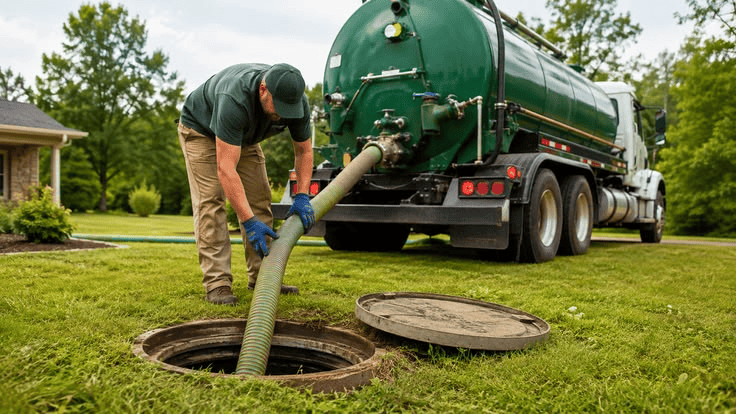
Everybody with a septic system asks this eventually: how long can I actually put this off? It's a fair question. Septic tank service isn't free, and there's always something else to spend that money on. But here's the thing: the moment that usually forces the issue is a backup in your basement or a yard that smells like, well, a septic tank. And by then you're not looking at a routine pumping bill anymore. You're looking at a much bigger one.
Table of Contents
Short answer: most tanks need pumping somewhere in the 3- to 5-year range. Longer answer: that number moves around a lot depending on your household, your water use, and what kind of system you've got buried out there. Let's get into it.
So, How Often Should You Actually Pump It?
Three to five years is the number most people hear, and honestly, it holds up for a lot of households. It assumes fairly normal conditions—a tank that's sized right, water use that isn't extreme, and nothing weird going on underground.
But normal isn't universal. A house with five people and a washing machine that never stops is going to fill a tank a whole lot faster than a couple who travels half the year. Smaller tank, heavy daily use? You might be looking at every two years. Bigger tank, lighter use? Five or six years isn't unreasonable.
That's really the point—3 to 5 years is a starting guess, not gospel. The real answer comes from someone actually checking the tank. A technician can measure the sludge and scum layers during an inspection and tell you, with real numbers, how much runway you've got left before your next septic system service and whether you need septic tank service in Charlotte Hall, MD or anywhere else nearby.
What’s Actually Driving Your Pumping Schedule
A few things determine how fast a tank fills up. Worth knowing, so none of it catches you off guard.
Household size is the obvious one: more people, more waste, shorter intervals. Tank size matters too and works the opposite direction: a bigger tank simply buys you more time before it's full.
Water use plays a bigger role than most people think. Long showers, faucets left running, and appliances cycling constantly—all of it pushes more liquid through the system and can stir up solids that would otherwise just settle at the bottom where they belong. Laundry and dishwashing add to that same effect; back-to-back loads mean a steady stream of water and detergent hitting the tank.
Garbage disposals are another factor people don't think about until someone points it out. Sending food scraps and grease down there regularly speeds up solid buildup compared to a household without one. And speaking of solids, anything beyond normal wastewater (thick paper products, wipes, cooking grease) fills that sludge layer faster than you'd expect.
Then there's the age and condition of the system itself. An older tank, or one with worn baffles, just doesn't process waste as efficiently anymore. That usually means it needs closer attention and more frequent professional septic service, even if nothing's technically "broken" yet.
Since all of this varies house to house, going off what worked at your last place or what your neighbor does isn't really a great plan. Get your specific setup looked at.
The Signs Your Tank Is Trying to Tell You Something
Even with a rough schedule in mind, it helps to know the physical signs. They usually show up before things get bad enough to cause an actual septic tank backup.
Slow drains are often the first clue—not just one sink acting up, but multiple drains around the house all sluggish at once. A sewage smell that lingers near your drains, your yard, or the tank lid is another obvious one, and it's one of the more common signs of septic tank problems in general.
Gurgling when you flush or run water usually means air's trapped somewhere it shouldn't be, which often happens when the tank's too full to vent properly. Actual backups of wastewater coming up into a sink, tub, or toilet are about as unmistakable as they get, and that one needs attention right away, not "next week."
Outside, keep an eye on the drain field. Standing water or soggy patches usually mean the system's overwhelmed and can't absorb wastewater the way it should. And oddly enough, grass that's too green or too lush right over the septic area can be a red flag too; it usually means effluent is leaching closer to the surface than it's supposed to.
Notice any of that? Don't wait for your "scheduled" date. Call for septic tank service now.
What Happens If You Just Keep Putting It Off
A lot of homeowners push this further than they should, so it's worth knowing what that actually costs down the line.
Once a tank's past capacity, wastewater has nowhere left to go except back into the house—that's your backup. Drains slow down or stop working altogether. Odors start showing up as gases and excess solids find their way out through vents or drains. If solids make it into the drain field, they clog the soil and pipes out there, and fixing that costs a lot more than the tank ever would have. Baffles, pipes, and the tank structure itself—prolonged neglect wears all of it down faster than it should.
And the bill at the end of all that? A full drain field replacement can run many times what years of routine pumping would've cost combined. Skipping service to save a little now almost always means paying a lot more later.
Point is, a full tank isn't just an unpleasant smell for a day. Left alone long enough, it can take the whole system down with it.
Why Regular Service Is Worth the Money
Routine septic tank service isn't only about draining the tank—it's really your best shot at catching small problems while they're still small. A technician doing a real inspection can check the tank, the baffles, and the drain field and flag wear before it turns into something expensive.
Staying on top of professional septic service tends to pay off in a few ways: fewer surprise backups, a longer lifespan for your system and drain field, better resale value since buyers like seeing documented maintenance, and staying compliant with whatever local health codes apply to residential septic service in your area.
It's not that different from getting your oil changed. Small, predictable cost. Protects something a lot more expensive.
Keeping Things Running Well Between Visits
There's a decent amount you can control on your own between professional visits.
Be careful what goes down the drain—wipes, paper towels, grease, and harsh chemicals—none of that breaks down the way toilet paper does, and it can clog or damage the system over time. Watch your overall water use too; spacing out laundry loads and fixing a toilet that won't stop running keeps you from dumping more liquid into the tank than it can actually process.
Fix leaks sooner rather than later. A dripping faucet doesn't seem like much, but it can add hundreds of extra gallons a month you weren't counting on. Keep vehicles off the drain field entirely—parking or driving over it can compact the soil or crack pipes buried underneath.
And the two that people skip most often: actually schedule your inspections and pumping instead of waiting for a problem, and keep some kind of record. Dates, notes, repairs—whatever it is. It helps whoever services the system next make better decisions about what it actually needs.
None of this replaces pumping. But it does stretch the time between visits and helps each septic tank service appointment go further.
When You Should Actually Pick Up the Phone
For routine care, stick to a regular interval—generally 3 to 5 years, or whatever your service provider recommends once they've actually seen your tank and know your household. Don't wait for a problem before booking that visit.
But some things aren't "wait and see" situations. If you're dealing with sewage backing up into a sink, tub, or toilet, call. A strong sewage smell that just won't go away, whether it's inside or out by the tank call. Standing water over the drain field, gurgling pipes, or several drains running slow all at once—the same deal. Those aren't "schedule it for next month" problems.
Final Thoughts
So—how long can your septic tank actually go without pumping? For most homes, somewhere between three and five years is a reasonable window. But your household size, your water habits, and the shape your system's in will push that number up or down. Rather than guessing, the smarter move is staying on a regular septic tank service schedule and paying attention when your system starts sending you signals.
At Cullison Excavating, LLC, we help homeowners keep their septic systems working the way they should—routine pumping, honest inspections, and help fast when something urgent comes up. Don't wait for a backup to force the issue.
If it's been a while since your last service, or you're seeing any of the warning signs above, call us today at (301) 994-1616 or request your septic tank service online—we'll get you on the schedule fast.