

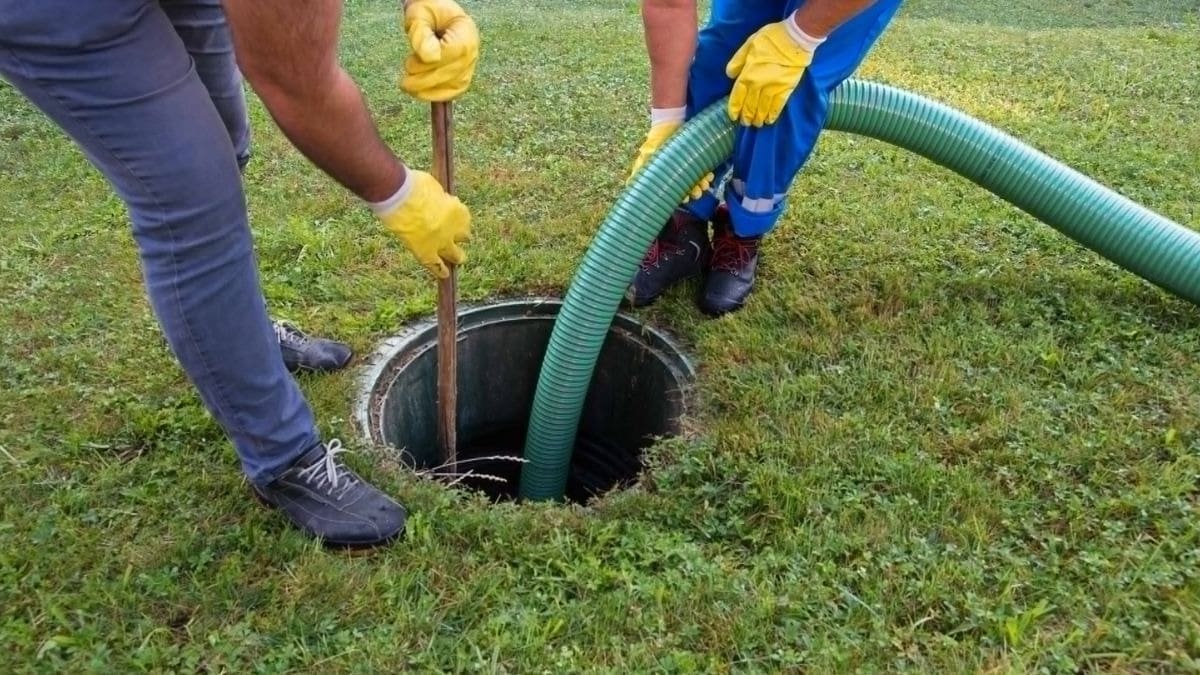
Your septic system is a silent working system that exists underground until it stops. A backup does not simply form a mess. It poses a health risk, a structural risk and an incremental bill that grows an hour longer you delay. Most of the homeowners take too long before they realize that something is amiss or they do not know what to do. This manual addresses the two issues.
Table of Contents
What is the Reason behind a Septic Backup?
The first step to fixing the problem and preventing the problem is to understand the cause.
Hardly removable buildup in the tank - When the sludge builds up to the point of being unable to move, then it has nothing left to do but go back up the drains.
Clogged drain field - Saturated or compacted soil prevents the proper distribution of liquid, and causes backpressure in the system.
Root intrusion (tree roots) - Intrusion of the root in pipes and crushing or blocking of flow over time.
Wastes that should not be flushed include Wipes, feminine products, paper towels, and grease, which are the major causes of clogs.
Heavy rains- Soaked ground does not allow the drain field to absorb effluent, and soon the system is overloaded.
A failing or undersized system - An older system, or one that was not originally properly sized to meet the load of your household, will not run under normal load.
None of them fix themselves. If the cause isn't addressed, the backup will return.
Red Flags You should Never Ignore
The majority of the septic failures provide you with some signs before it turns into an emergency. It is always cheaper to do what is right early.
- Clogged drains in various fixtures- not a single sink or toilet.
- Drains or toilets - gurgling.
- Smell of sewage in the home or around the drain field.
- Spongey or wet or unnaturally green patches of grass on top of the sewer.
- Sewage retroceding in the lowest drains in the house.
When you find yourself with 2 or more of these at the same time, you have not a little plumbing problem, but a septic problem that cannot be allowed to get any further out of hand.
Immediate Steps When a Backup Happens
When the backup hits, your response in the first hour matters.
1. Cease water usage - Each flush, each faucet, each load of laundry is another burden to an already overburdened system. Shut it all down.
2. Isolate individuals and other pets in areas of infection - Sewage is a breeding ground of harmful bacteria, such as E. coli and other pathogens. This is not a home made cleanup scenario.
3. Don't use chemical drain cleaners - They do not fix septic issues and they destroy the good bacteria your tank relies on in order to run.
4. Call an emergency septic service - This is not optional. It takes a licensed professional to identify the underlying cause - not merely clear the apparent symptom. In case of an emergency septic service, the pumping of the tank, inspection of the lines, and identification of whether the drain field or pipes are compromised are observed.
5. Document everything - Record images of the backup, date when it began, and record what you noticed prior to that. This assists in insurance claims and provides the technician with valuable insight.
What a Professional Septic Backup Service Does?
Calling a septic backup service, you are not merely paying somebody to pump a tank. An experienced crew will:
- Locate and access your septic tank and distribution box
- Sump up solid accumulations and gauge levels of sludge and scum.
- Check the inlet baffle and outlet baffle to see whether they are damaged.
- Camera-inspect drain lines in case there is a suspicion of a blockage.
- Check the drain field to determine whether it is saturated or not.
- Give a written evaluation of what went wrong and what is required.
This process tells you whether you're dealing with a temporary overload or a system that needs major repair or replacement.
When You Need a Septic Installation Service?
There are times when a repair is not sufficient. When your system is more than 20-25 years old, is undersized to serve your household, or has a failed drain field, you require a septic installation service - not another patch job.
Indications that you have crossed that line:
- Multiple backups in the same year.
- Replacement cost of drain fields that are approximating or surpassing the costs of acquiring a new system.
- The system does not conform to the existing local code requirements.
- You are adding a home and the current system is unable to support the load.
The new installation would entail soil testing, proper system sizing, permitting and excavation. Corner-cutting here poses exactly the same issues as it did 10 years ago. Use a licensed contractor to do the permitting and design of the system appropriately to your property soil type and household size.
Precautionary Maintenance That Works
Prevention is straightforward. Homeowners tend to ignore it until they are up to their waist in sewage.
- Have your tank pumped every 3-5 years depending on the number and use of people in the household.
- Always flush waste and toilet paper only - the flushable wipes label is a scam.
- Move the divert roof drains and surface water off the drain field.
- Do not park or construct on the top of the septic area, it is compacting and crashing pipes.
- Document any pumping, inspections, and service calls.
- Book your yearly inspection in case your system is more than 15 years old.
The mean cost of septic pump-outs is a few hundred dollars. A drain field replacement can cost $10,000 to $30,000. The prevention math is not a complex one.
Conclusion
One of those situations is a septic emergency, in which inaction costs you - both in money, both in health risk, and both in damage to your property. Be familiar with your red flags. Take immediate action when an error occurs. And collaborate with experts that can distinguish between a one-liner and a genuine problem solution.
In need of a reliable septic backup service, professional emergency septic service or a complete septic installation service, Cullision Excavating has the experience and equipment to do it right. Whether it is in response to an emergency or the installation of the entire system, they bring the experience that homeowners must when stakes are high. You do not need to wait until a small issue turns into a disaster, contact Cullision Excavating before it gets out of control.
Frequently Asked Questions (FAQs)
What do I do to tell whether my septic system is backing up or it is simply a plumbing clog?
A clog in the plumbing will usually only impact one of the fixtures. A septic backup can appear in several drains at the same time - toilets, sinks and showers all slow down or back up simultaneously. You might also notice smells outside in the drain field. In case several fixtures are involved, seek the services of a septic professional, rather than a plumber.
Will my water be allowed to be used in any way during a septic backup?
No, all the gallons of water you consume feed into an already overloaded system and contribute to the worsening of the situation. Use the minimum amount of water possible, even in the absence of a professionally trained expert, there can be no flushing, no dishwasher, no showers.
How frequently should my septic tank be pumped to prevent an emergency?
In a typical family with 4 individuals, the typical rule of thumb is every 3-5 years. The increased pumping frequency may be necessary in the bigger households or in case of heavy usage. After an inspection, your service provider can suggest a schedule based on the tank size and patterns of usage.
Which is the difference between a septic backup and a drain field failure?
Full tank, blocked pipe, or failed drain field can be the cause of a backup. A drain field failure is more critical, that is, the soil it relates to is unable to absorb the effluent any longer, this is often caused by excavation and replacing the affected soil. Which one of these you are dealing with will be determined by a camera inspection and site assessment by a qualified septic backup service provider.
What is the estimated duration of service of a septic installation service, beginning to end?
It relies on allowing timelines, soil testing conditions, and complexity of systems. In a realistic sense, the process of initial assessment to a fully operational new system can take between a few weeks to a couple of months. In some jurisdictions, emergency situations may permit expedited permits but proper installation cannot be in a hurry, lest it fails in future.
It relies on allowing timelines, soil testing conditions, and complexity of systems. In a realistic sense, the process of initial assessment to a fully operational new system can take between a few weeks to a couple of months. In some jurisdictions, emergency situations may permit expedited permits but proper installation cannot be in a hurry, lest it fails in future.