

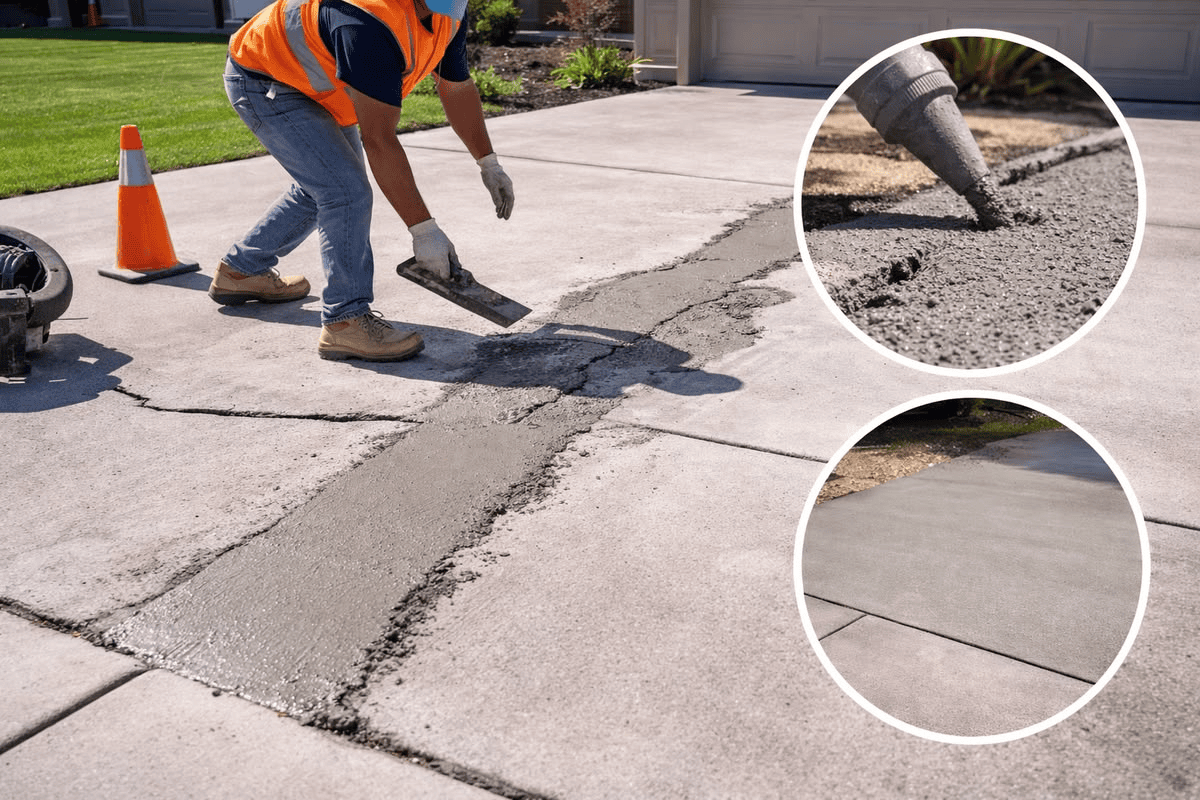
Potholes near the mailbox. A soggy patch by the garage. Standing water after every storm. So you fill the holes. Toss down fresh gravel. Move on. Then it rains again — and the same soft spot shows up in the same place.
Table of Contents
Sound familiar? You're probably not dealing with a simple surface problem. A lot of driveway damage that looks like normal wear is actually a symptom of something happening underneath: poor slope, weak soil, or a base that's stopped doing its job.
That's where driveway regrading in Southern Maryland comes in, alongside its close cousin, base repair. Knowing which one your driveway needs can save you from patching the same spot every spring.
What Is Driveway Regrading?
Regrading means adjusting the shape, slope, or elevation of a driveway so water actually moves the way it's supposed to.
Every driveway is built with some slope, even a subtle one. That slope carries rainwater off toward a ditch, swale, or low point in the yard. It's not decoration—it's the whole point.
Over the years, that slope can flatten out. Settling soil, constant vehicle traffic, erosion, freeze-thaw cycles — any of these can create low spots that weren't there before.
Once that happens, water stops running off and starts sitting. It collects in the same low areas after every rain, softens the ground, and slowly eats away at the gravel or asphalt above it.
This is exactly why driveway regrading in Southern Maryland matters—it fixes the problem by reshaping the driveway so water gets redirected away from problem spots and away from your house or garage. It's not about piling on more material. It's about correcting the shape of what's already there.
What Is Driveway Base Repair?
Under every driveway surface sits a base layer, and that base does most of the heavy lifting.
A solid base is compacted properly, drains well, and holds its shape under the weight of vehicles. When that base breaks down from bad soil, water getting in, years of heavy use, or just age, it can't support the surface anymore.
This is often where "surface" damage actually starts. Potholes, ruts, sinking sections — these aren't always a sign the top layer is bad. More often, they're a sign the base underneath has failed.
You can resurface a driveway a dozen times, but if the base is unstable, the damage keeps coming back.
Signs Your Driveway May Need Regrading
Watch for these:
- Water pooling in the same spot after every rain
- Water running across the driveway instead of off to the side
- Gravel washing away near slopes or curves
- Noticeable high and low spots
- Standing water near the driveway entrance or garage
- Drainage flowing toward the house instead of away from it
- Erosion that keeps returning in the same location
None of these look dramatic on their own. But when they repeat in the same spots, they're usually pointing to a grading or drainage issue not something a bag of gravel will fix.
Signs Your Driveway May Need Base Repair
These point to a different kind of problem, one underneath the surface:
- Deep potholes that keep coming back after patching
- Ruts or visible tire tracks that don't smooth out
- Sections that feel like they're sinking
- Soft, spongy areas, especially after rain
- Cracking or surface breakup that spreads
- Gravel that seems to vanish into the ground
- Uneven spots that stick around even after fresh material
- Repairs that fail again within weeks
If a driveway keeps breaking down in the same place no matter how many times it's patched, the base is usually the real problem.
Regrading vs. Base Repair: What’s the Difference?
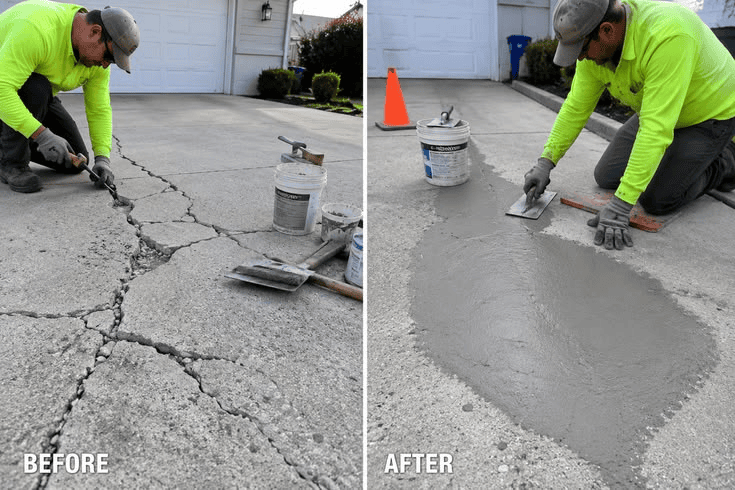
Think of them as two different layers of the same issue.
| Regarding | Base Repair |
| Addresses slope and elevation | Addresses underlying support |
| Focuses on water flow | Focuses on stability |
| Corrects drainage problems | Corrects sinking and rutting |
| May reshape the driveway | May involve removing and rebuilding failed sections |
Some driveways only need one. Plenty of others, especially older ones with a history of drainage trouble, need both. Bad grading can wear down a base over time, and a failing base can make grading problems worse. That's why it's worth having both looked at together.
How Drainage Problems Can Damage a Driveway
The pattern usually goes like this: water leads to erosion, erosion weakens the base, and a weak base shows up as surface damage.
Rain that isn't redirected properly has to go somewhere. If the grading doesn't move it off to the side, it sinks into the surface instead. Sitting water softens the base and washes away fine material, so the base holds less weight than it used to. Soil shifts. Erosion sets in. And the surface starts showing it—potholes and washouts, the same spots, every time it rains hard.
That cycle keeps repeating until someone deals with the grading or base issue underneath, not just the damage on top. In many cases, professional drainage services are what finally break the cycle—correcting the water flow before it can wear down the base again.
Can Adding More Gravel Fix the Problem?
It's usually the first thing people try. And it can help — for a while.
Gravel fills in low spots and covers up rough patches. But it doesn't fix a bad slope. It doesn't stop pooling water. It doesn't rebuild a weak base.
If the underlying issue isn't addressed, new gravel tends to wash away or sink in the exact same places—sometimes in a single season.
For minor wear or general upkeep, adding surface material makes sense. But if the same spots keep failing no matter how much gravel you add, the problem runs deeper.
When Should You Call a Professional?
Not every driveway issue needs excavation. But it's worth having someone take a look if:
- The same potholes keep coming back
- Water repeatedly pools in the same area
- Parts of the driveway feel like they're sinking
- Large areas feel soft or unstable
- Heavy rain causes washouts every time
- Erosion is getting more noticeable
- Drainage from the driveway is affecting the yard or house
Surface repairs haven't held up
A professional assessment can pin down whether it's grading, base stability, or drainage—or some mix of all three—and how big the project actually is.
What a Professional Driveway Repair Process May Include
Every driveway is different, but a typical evaluation and repair process may involve:
- Inspecting the driveway and surrounding drainage
- Identifying grading and water flow problems
- Checking whether the base is stable
- Removing damaged or unstable material where needed
- Correcting the grade or slope
- Repairing or rebuilding the base
- Installing or restoring the surface material
- Confirming water drains properly afterward
Not every driveway needs every step. Some just need regrading. Others need base work, drainage correction, or a combination.
Why Proper Driveway Grading Matters Long-Term
A driveway with correct slope and a stable base tends to handle rain, traffic, and daily wear more predictably. Water moves where it should instead of pooling where it shouldn't, which cuts down on washouts and erosion. A solid base helps the surface hold up instead of developing the same soft spots year after year.
That doesn't mean a driveway never needs attention again; soil, weather, and use all play a role over time. But fixing grading and base issues directly, instead of patching the surface over and over, usually means a more stable driveway and fewer repeat repairs.
Conclusion
Driveway damage isn't always what it looks like on the surface. Regrading deals with slope and shape, so water moves away instead of sitting and causing damage. Base repair deals with what's underneath the support that keeps the surface from sinking, rutting, or cracking. Many driveways need one. Plenty need both, especially after years of drainage trouble.
If your driveway keeps developing the same potholes, holding the same standing water, or showing signs of sinking no matter how many times you patch it, it might be time to look past the surface. Cullison Excavating, LLC works with Southern Maryland homeowners on driveway grading, excavation, drainage correction, and related road work and can help figure out what's actually happening beneath your driveway before recommending a fix. Reach out to Cullison Excavating to get your driveway's grading, base, and drainage looked at by people who do this work every day.
Call Cullison Excavating, LLC, at (301) 994-1616 for a free driveway assessment, or contact us online. Proudly serving homeowners across Southern Maryland.
FAQs
How do I know if my driveway needs regrading?
Water keeps pooling or running across the same spots; that's the main sign.
What's the difference between regrading and base repair?
Regrading fixes slope and water flow. Base repair fixes what's holding the surface up.
Can poor drainage damage a driveway?
Yes, standing water erodes the surface and weakens the base underneath.
Can adding gravel fix a damaged driveway?
Only temporarily. It won't fix bad slope, drainage, or a weak base.
When should I hire a professional?
If repairs keep failing in the same spot, it's time for an assessment.