

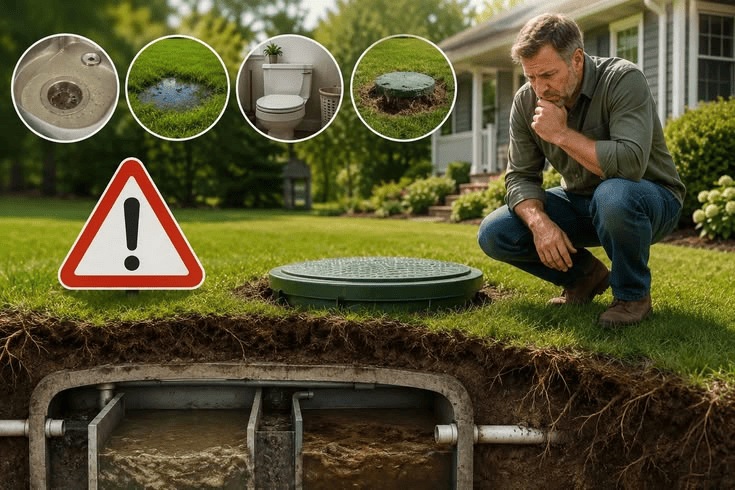
You know the spot. Same corner of the yard, every single time it rains. Water just sits there — sometimes for days. Or it's not even a spot, really; it's more of a path: water running past the flowerbed, down along the fence line, straight toward the house.
Table of Contents
Sound familiar? You're not the only one dealing with this. A lot of homeowners around here run into it, and honestly, it's rarely bad luck. Nine times out of ten it's grading.
Here's the thing — a property that isn't graded right will fight you every single storm. Doesn't matter how much mulch or topsoil you dump on the problem spot. A grading service in Southern Maryland can usually spot what's actually going on before it turns into a foundation issue, ruined landscaping, or (worse) a septic headache. Proper property grading sounds like one of those boring homeowner details nobody thinks about, but it's honestly the difference between a yard that shrugs off rain and one that turns into a swamp every April.
So, what actually is good grading? How does bad grading do damage? And when does it start messing with something as important as your septic system? Let's break it down.
What Is Property Grading, Really?
At the core of it, grading is just about slope. Making sure water has somewhere obvious to go once it hits the ground instead of just... sitting there. Done right, it steers rainfall away from the house, the driveway, and the septic area—instead of letting it collect wherever gravity happens to leave it.
People mix this up with leveling a lot. They're not the same thing, though. Leveling just flattens out a section of yard, which is fine if you're putting in a patio or a garden bed, but it doesn't do much for water management by itself. A land grading service is thinking about the bigger picture—where's the water coming from, where does it want to go, and is that actually a good place for it to end up?
Here's the part that trips a lot of people up: a yard can look completely flat and still be graded wrong. Water doesn't care what things look like. It just follows the lowest path available. And if that path happens to run toward your foundation or your septic drainfield—that's where things start going sideways.
How Poor Grading Shows Up in Your Drainage
Bad grading doesn't usually show up all at once. It's gradual. A few of the more common ways it shows up:
Standing water. Any low spot with barely any slope is basically an open invitation for rain to just sit there instead of moving along.
Muddy, saturated ground. Southern Maryland has a lot of clay-heavy soil, and clay is slow to drain.Combine that with poor grading, and you get ground that stays soft and squishy for way longer than it should.
Water pooling against the foundation. This one's worth taking seriously. Water sitting along a foundation can, over time, find its way into a crawl space or basement.
Erosion. Runoff with nowhere controlled to go ends up carving its own path—usually right through the topsoil and whatever landscaping happens to be in the way.
Water heading toward the house or garage. Instead of getting steered around a structure, poorly graded slopes sometimes just point runoff straight at it.
Beat-up driveways and landscaping. Gravel driveways especially take a beating from repeated washouts. Plant beds don't do much better under constant saturation either.
None of this always traces back to one single cause. But grading tends to be part of the picture more often than people expect — especially on older properties where nobody's looked at the slopes since the house went up.
Can Poor Grading Actually Affect a Septic System?
This is where it gets a little more nuanced. Septic system drainage problems usually aren't caused by grading on its own—but grading can absolutely make an existing situation worse or set the stage for one to develop.
A septic drainfield needs soil that isn't already saturated to do its job properly. Wastewater has to get absorbed and filtered gradually. If surface runoff keeps flowing toward that area because the grading's off, the soil around it can stay wet far longer than it should, which cuts into how much it can actually absorb.
What does that actually look like day to day? Slower drainage after you run water in the house. Soggy ground sitting right above the drainfield. Sometimes a faint smell after it rains. To be fair, not every septic problem traces back to grading—age, maintenance, how the system's been used—all of that matters too. But surface water is one of the few things a homeowner can actually control. So it's worth dealing with early rather than waiting.
If the ground around your septic area never seems to fully dry out, it's worth having someone check both the grading and the system itself. Cullison Excavating handles septic services and drainage services together fairly often—for exactly this reason.
Signs Your Property Might Need Regrading
Some things worth keeping an eye on:
- Water pooling after rain and taking forever to soak in
- Ground that stays soggy even after several dry days
- Erosion channels, or bare dirt patches where grass just won't take
- Runoff visibly heading toward the house or garage
- A gravel or dirt driveway that keeps washing out
- Wet ground near the septic tank or drainfield that never seems to dry
- Low spots that collect water no matter what you try
One of these on its own isn't necessarily a big deal. A few together—or the same one showing up over and over—usually means it's time to look at actual yard drainage solutions, not just another bag of topsoil.
Why This Matters More in Calvert, Charles, and St. Mary’s Counties
Homeowners in this part of the state are dealing with a specific mix: clay-heavy soil, storms that can dump a lot of rain fast, and plenty of properties running on septic instead of public sewer. Put those together, and surface water stops being just an annoyance—it becomes something worth actually managing.
Wooded lots, sloped lots, older homes where nobody's touched the grading in years — those tend to be the first ones to run into trouble. If any of that sounds like your place, it might be worth a second look.
What Professional Grading Actually Involves
It's not just showing up with a bulldozer and pushing dirt around. A real approach usually goes something like this:
- Walk the property—look at current slopes, soil, and any obvious drainage issues.
- Figure out where the water's actually going wrong—pooling, running toward structures, or whatever the pattern happens to be.
- Map out where it should be going instead, based on the layout and where the septic system sits.
- Reshape the elevations so water actually moves the right direction.
- Build in proper drainage patterns—swales, regraded low spots, whatever the site calls for.
- Stabilize everything afterward so grass and ground cover can actually take root.
Cullison Excavating offers residential grading services and excavating services built around this exact process—accounting for soil conditions, existing septic infrastructure, and whatever drainage quirks a given site has. More detail on that over on our grading services page.
Why DIY Leveling Isn’t the Same as Real Grading
It's tempting, obviously—grab some fill in the low spot and call it a weekend. Sometimes that's fine. A lot of the time, though, all it does is push the water problem somewhere else.
Real grading accounts for a few things a weekend project usually doesn't:
- How water moves across the whole property, not just the one spot bugging you
- Where the septic components and drainfield actually sit
- Buried utility lines you can't see from the surface
- The property's overall elevation, not just the local high and low points
- Where all that redirected water actually ends up
Fill in one low spot without thinking through the rest, and you might just push water toward the foundation, or the septic area, instead of away from it. For anything beyond a minor patch job, it's worth getting someone who does this for a living to take a look first.
When It’s Time to Call a Professional
- The same areas keep flooding, storm after storm
- Basic landscaping fixes stopped working a while ago
- Water is clearly moving toward the foundation
- Erosion keeps getting worse instead of better
- Ground near the septic drainfield won't dry out
- You're getting ready to build or add onto the property
- The fix needs real elevation changes, not a patch job
Catching any of this early is almost always cheaper than waiting until it turns into a foundation repair or a septic problem.
Bottom Line
Proper property grading isn't a glamorous topic. But it quietly affects a lot—how your yard drains, how long the driveway and landscaping actually last, and how much stress your septic drainfield is under. It's not the cause of every drainage or septic headache out there. It is, though, one of the few things a homeowner can actually get ahead of before it turns into something bigger.
So if you're tired of watching the same corner of the yard flood every time it rains, or you're seeing standing water near your septic system, it's probably time to have someone take a real look. Cullison Excavating, LLC works with property owners around the region on exactly this kind of assessment, and as a provider of grading services in Southern Maryland, we're glad to come walk the property with you. Reach out and let's talk through grading, drainage, or excavation for your land.
Ready to fix your drainage for good? Call (301) 994-1616 or contact Cullison Excavating.
FAQs
How does poor grading affect drainage?
It throws off the slope. Water needs to move away from your home—leading to pooling, soggy soil, or runoff heading toward the foundation.
Can property grading cause septic problems?
Not usually on its own, but it can saturate the soil around a drainfield, making it harder for the system to absorb wastewater the way it should.
How do I know if my yard needs grading?
Recurring standing water, soggy patches that won't dry up, erosion, or runoff heading toward the house are all worth paying attention to.
Can grading fix standing water in my yard?
Often, yes — correcting the slope so water actually has somewhere to go tends to be one of the more effective long-term fixes.
When should I hire a professional grading contractor?
When DIY fixes just aren't holding up, water's threatening the foundation or septic area, or you're planning new construction.